
Return to journal
How far do you really want to go? Mapping out creative ambition for success
Daniel Jackson, Brand Strategist at RY, explores how ambition shapes the direction and outcome of brand work
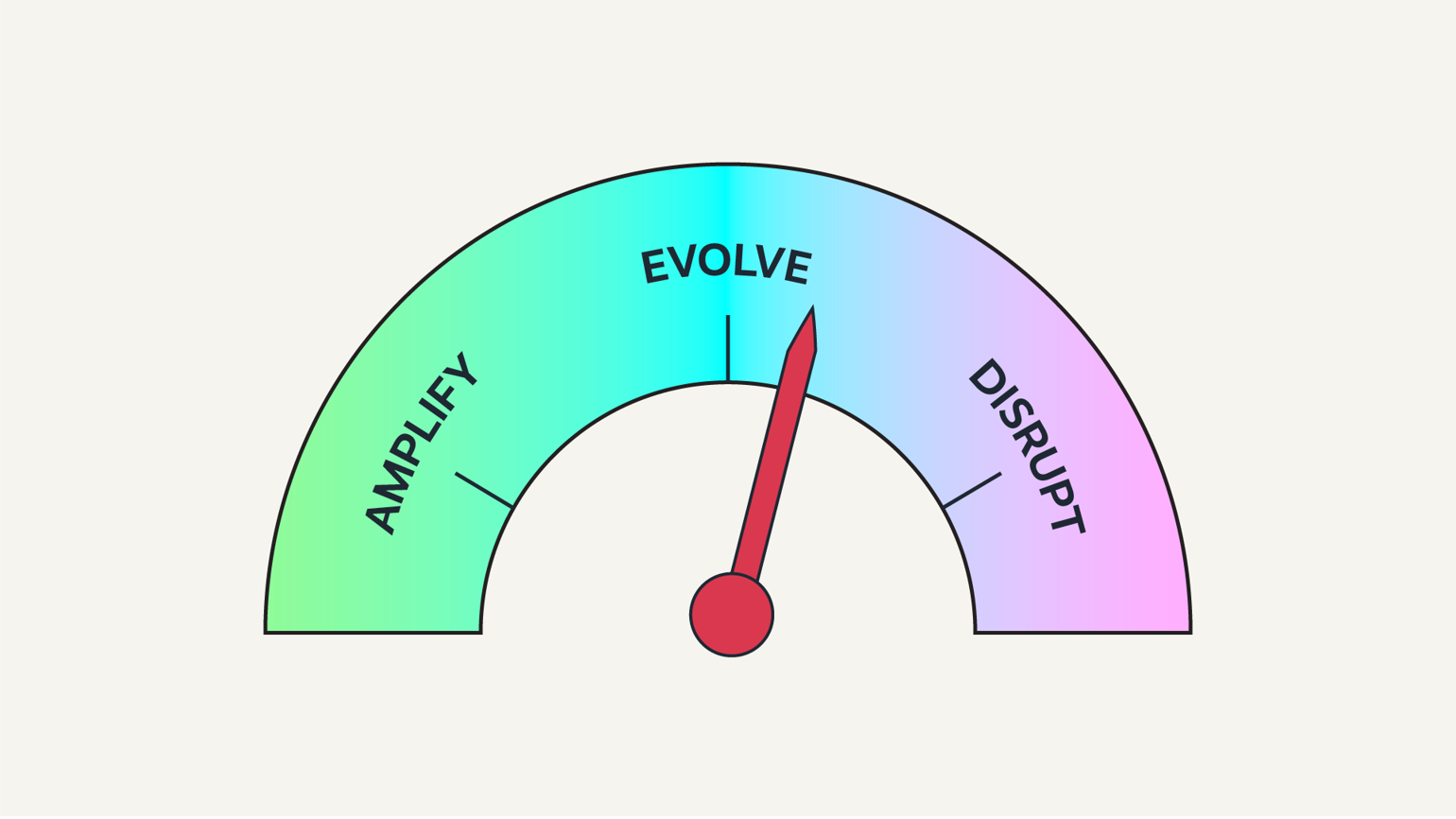
Before your next brand conversation, don’t start with a mood board or a competitor audit. Start with the question: how far are we actually willing to go?
Inspiration and ambition are two of the most important ingredients in any brand project. Inspiration is what shoots you to the stars. Ambition is about knowing which star you’re aiming for.
Get both right, and creative work lands with clarity and conviction. Get them wrong - or worse, skip the conversation entirely - and you end up with a bumpy road to success.
Understanding ambition is another means of ensuring that investment is pointed in the right direction from day one.
Creating a shared language for ambition.
Most brand guardians walk into a project with a version of ambition already in their heads. The challenge is that in any organisation, those versions don’t always match.
A CMO wants to break the mould. A CEO wants to reassure their shareholders. A CFO wants to protect what’s already working. Each of those positions is legitimate. Each reflects a different set of pressures, responsibilities, and risk appetites. And if those differences aren’t surfaced and resolved before the creative work begins, they become the source of endless revision, diluted output, and bruised relationships.
The push and pull between these perspectives is completely normal. But left unmanaged, it produces friction that can pull focus from the work.
What’s needed is a shared language for ambition when it comes to what a brand stands for and how it looks. A way of asking the right question - how far are we going? and getting everyone to answer it honestly, in the same room, before the strategists start strategising and the creative team start creating.
One model. Three modes of ambition.
We think about creative ambition across a spectrum of three modes. Not a hierarchy -where one is better than the others - but a genuine spectrum, where the right answer depends entirely on the business, its context, and where it needs to get to.
1. AMPLIFY
The ambition to strengthen existing equity and make it work harder.
This is about sharpening, refining, and evolving existing assets to show development without walking away from established equity. This is about deepening a purpose statement or refining a proposition that already has traction. Both are a step towards modernisation that retains what already works - and makes it work harder.
Done well, this isn’t the cautious option. It’s the disciplined one. It says: we know what’s working, and we’re going to make it work harder. For brands with strong recognition, real audience trust, or cultural heritage that would be expensive and risky to discard, this is often the most strategically intelligent move available.
Tottenham Hotspur’s 2024 brand refresh is a near-perfect example.

The world-famous cockerel, the brand’s most powerful asset, wasn’t touched. It stands prouder than ever. What the team did was build richly around it. The result is a brand system that has significantly more range and flexibility across digital and physical environments, while feeling unmistakably, completely Spurs. Nothing was discarded. Everything was deepened.
The risk here isn’t timidity. It’s misidentifying the elements to amplify.
2. EVOLVE
The ambition to evolve with purpose - inspired by what's working, expressed in your own voice.
Evolution isn’t about copying what’s working elsewhere - it’s about understanding why it’s working, then applying your own authentic take to it. It means looking within or beyond your immediate category, finding the mechanics of success, and borrowing the principle while making the expression entirely your own.
This is the most nuanced mode, and the one that requires the most rigour to get right. The distinction between smart evolution and hollow imitation is everything. You’re not looking at a competitor and asking, “How do we sound, act, look more like them?” You’re observing a category that’s earning attention from your audience and asking, “What is it about this that’s working - and how do we apply that logic with our own voice?”
Take Lloyds rebrand for example, which, instead of defaulting to the traditional tropes of banking brands, turned to inspiration from the visual language of tech giants, creating an operating system that iterates, transforms, and evolves, future-proofing it for the future. Key assets were also evolved, such as the iconic equine logo, redesigned to face forward – towards the future, echoing the new positioning ‘Lloyds moves everyone forward’. What changed was how that heritage was translated into modern cultural energy. That’s evolution done well: the inspiration came from outside the category, the execution was unmistakably the brand’s own.
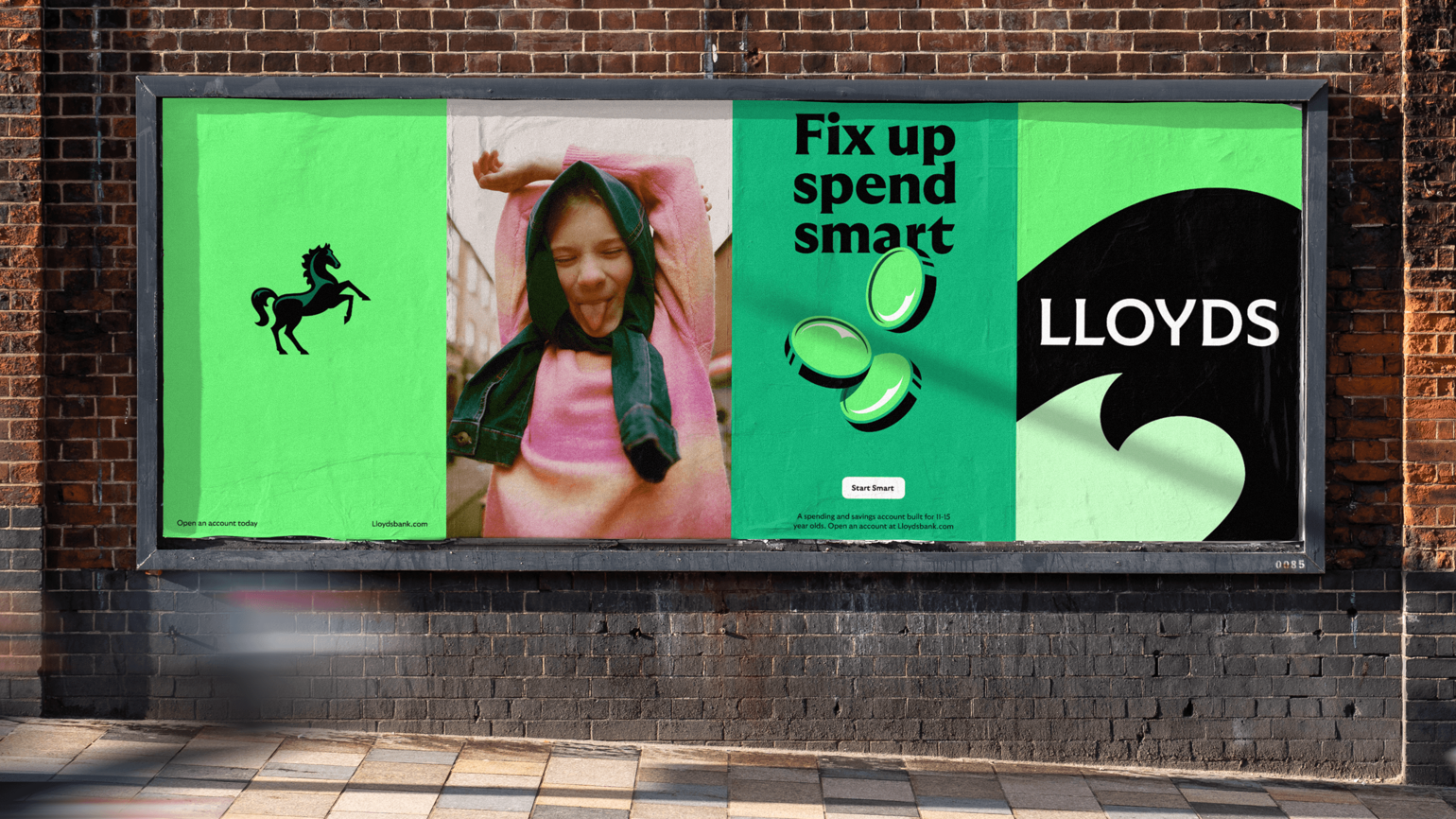
This mode is right for brands at an inflection point. Ambitious enough to change, but with genuine equity worth carrying forward.
The risk is that the inspiration overwhelms the authenticity. If the reference point becomes the destination, you end up somewhere that looks credible but doesn’t feel like you.
3. DISRUPT
The ambition to authentically challenge convention and change the game entirely.
Disruption is often misunderstood as a creative decision. It isn’t. It’s a business decision first - and one with significant consequences.
To truly disrupt means doing something genuinely unexpected for your category. Visually, tonally, structurally. It means changing the game, not just the look. And that only works when the rest of the business can back it up: the product, the culture, the internal story.
This is where culture becomes critical. If your people don’t believe in the shift, if the brand transformation feels like something being done to the organisation rather than by it, then disruption rings hollow the moment anyone interacts with a real human being from that business. The external expression and the internal reality have to move together.
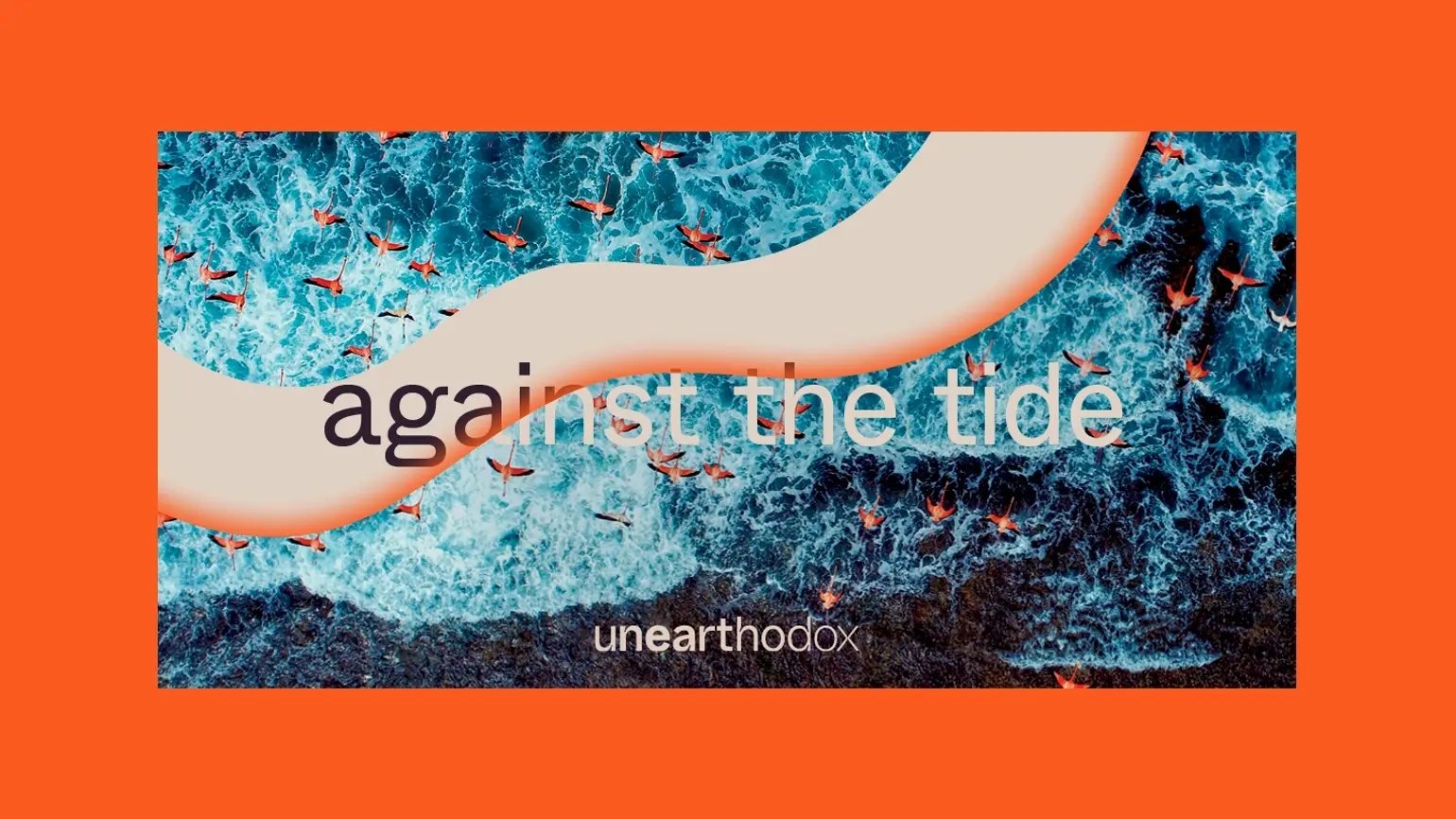
The Luc Hoffmann Institute - a globally respected conservation NGO - is a powerful example of this done right. Newly independent and determined to challenge the conventions of their field, they came to RY wanting a brand that matched their genuine radicalism. What emerged was Unearthodox: a new name, a new identity, a new way of showing up entirely. The positioning ‘rebel to regenerate’ wasn’t a marketing line bolted on after the fact. It came directly from deep conversations with the people who made the Institute what it was: an unconventional, determined, even radical spirit that had always driven its work, but had never been expressed outwardly with the same conviction. The name itself is a portmanteau built to embody that contradiction - prestigious heritage and rebellious intent, held in the same word.
Every element of the brand was built to carry that tension. The visual language, the tone of voice, the photography and motion graphics, the website - all of it designed to feel genuinely unexpected for a conservation institution, while being completely grounded in what the organisation actually believed and how it actually worked. That’s the test for real disruption: does the unexpected creative decision serve the organisation’s truth, or does it just perform boldness? For Unearthodox, the answer was clear. The brand didn’t feel radical for the sake of it. It felt radical because the Institute genuinely was.
Disruption is right for genuine new entrants, for organisations that have fundamentally changed what they do or who they serve, and for businesses in categories that are ready to be challenged.
The risk of misapplication is severe: a disruptive brand that isn’t tethered to business reality is the most expensive vanity exercise in the book. It gets talked about. It doesn’t work.
Why this thinking matters
- The ambition framework isn’t just a creative tool. It also -
- Shapes the brief.
- Directs inspiration.
- Calibrates what good looks like.
- And it’s equally an alignment tool.
When a leadership team can look at this spectrum, identify where they sit, and genuinely agree on it, the whole project changes. Decisions get made faster. Revisions reduce. Confidence holds.
There’s also a longer-term dimension. Where a brand sits on this framework isn’t fixed forever. A brand might Amplify today, Evolve in three years, and Disrupt after a fundamental business transformation. The framework gives you a shared language for that journey - and a way of revisiting the question honestly at each stage, rather than defaulting to habit or comfort.
Ultimately, this is what it means to build a brand that works. Not just making it look right, but making sure it’s pointed in the right direction - calibrated for where the business actually is, and how far it’s genuinely willing to go.
The question worth asking
Before your next brand conversation, have this ambition framework in your mind. Start with the question: how far do we really want to go? Get the room to answer it honestly. Surface the tensions. Find the alignment. Then build from there. That’s where the real work begins.